Here Comes the Sun

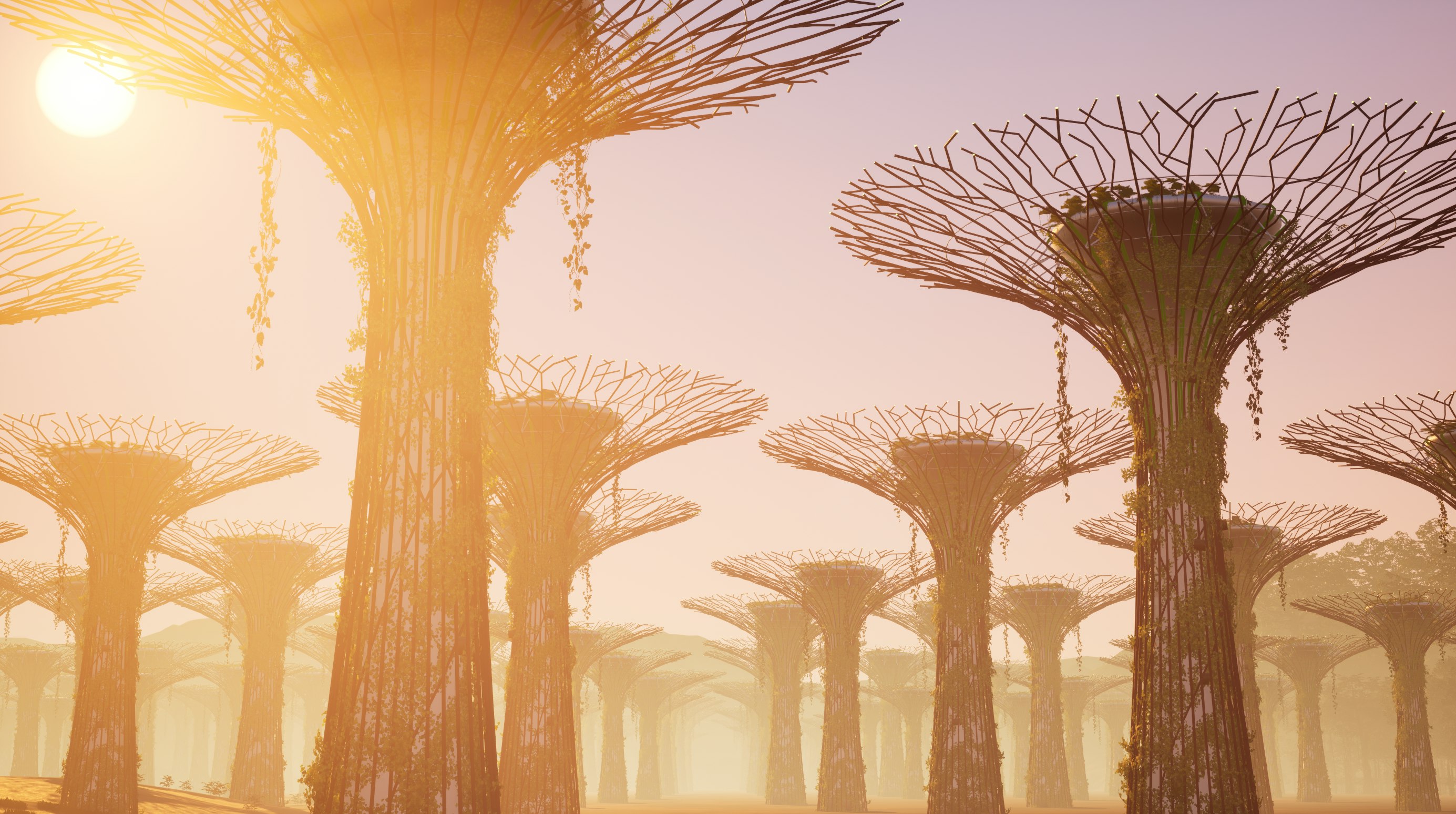
Video still Alice Bucknell, Staring at the Sun, 2024-2025 © Alice Bucknell
We have built systems of extraordinary complexity to predict, control and optimize our world. Artificial intelligence, we are told, will solve our greatest challenges. Yet the more intelligent our machines become, the more we seem to forget the oldest forms of intelligence surrounding us: that of the sun broadcasting its energy with perfect consistency for billions of years, that of marine microorganisms perfecting their luminous architectures. Intelligence is not a human invention.
It also exists in human communities when they choose cooperation over competition, when they dare to imagine other possibilities together. For imagination is that uniquely human faculty that allows us to understand through speculative leaps, through empathy and creativity.

Solar Protocol © Solar Protocol
The three works in this exhibition explore these entanglements. Through the visual languages of cinema – storytelling, editing, power of the moving image –, they activate our imagination and make visible the invisible intelligences that sustain life on this planet.
Alice Bucknell projects us into Staring at the Sun (2024 – 2025), a near future where geoengineering – technologies aimed at deliberately modifying the climate – has become our last gamble with planetary systems. The film maps the territory where technological intervention meets ecological consequences, where human vanity confronts the complexity of climate systems.
Solar Protocol (2021 – 2025) by the collective of the same name led by Tega Brain, Alex Nathanson and Benedetta Piantella demonstrates that a solar-powered internet is possible. This work reveals that technology is never merely technical: Solar Protocol functions only through a global network of volunteers. The system is deliberately fragile, dependent on human care, and acknowledges its dependence on both solar cycles and cooperation.
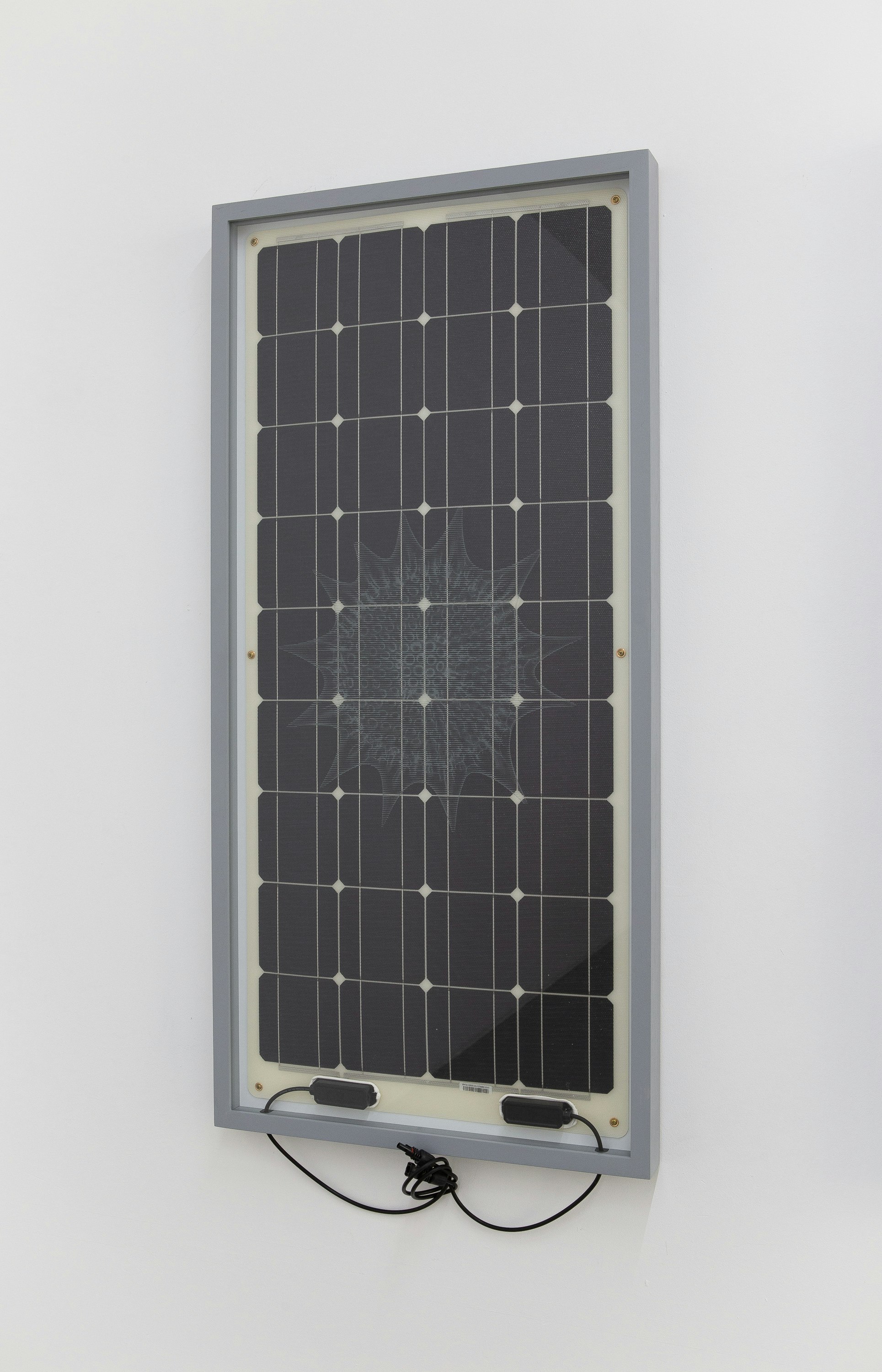
In Solar Panels (Radiolaria series), 2022, by James Bridle, the silica skeletons of radiolarians – these microorganisms that have spent millions of years perfecting geometric forms that capture light – are superimposed onto solar panels. This visual encounter is a revelation: evolution is the most sophisticated research programme on Earth.
These works expand the territory of what we can imagine. They show us that innovation does not mean domination, that technology can integrate into ecological and social systems, that the intelligence we need is already here – in sunlight, in microorganisms, in communities working together. It is up to us to learn to listen, to participate, and to let ourselves be guided by the intelligences that surround us!


The exhibition is organised by Cercle Cité, with support from Luxembourg City Film Festival.


With support from Ministère de la culture, le Ministère de l’Environnement, du Climat et de la Biodiversité.

Elektron is supported Ville d’Esch-sur-Alzette.

Artworks

Artists


1A Rue du Curé
L-1368 Luxembourg
Free, no booking required
Daily, 11:00 – 19:00
Accessible for people with reduced mobility
cercle-cite.lu